How to bend plywood with a laser cut living hinge
Short answer
A living hinge is a pattern of many short parallel cuts that lets rigid plywood bend. To make one, choose the bend area, generate the cut pattern with a living hinge generator, and cut it in 3 mm birch plywood. Longer cuts and closer lines make it more flexible.
Updated 17 November 2026Good starting settings (3 mm plywood)
- Cut length: 25–30 mm
- Gap between cuts: 3 mm
- Line spacing: 1.5–2 mm
- Bend zone: 30–40 mm for 90°, 40–60 mm for a book spine
Projects that use a living hinge
- Notebook and journal covers
- Round and oval boxes
- Curved lamp shades
- Phone and tablet stands
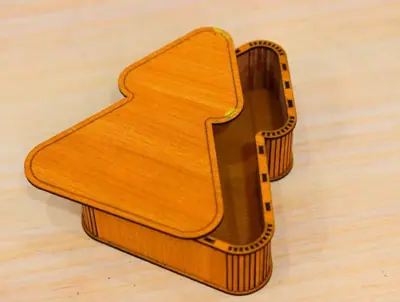
- Gift boxes with a bending lid
Why hinges break
The spacing is too small for your kerf, the plywood is dry or brittle, or the bend is too tight. Increase spacing to 2 mm, use better plywood, or make the bend zone wider.
Questions
Can you make a living hinge in acrylic?
Not with straight cuts – acrylic cracks when bent cold. Use plywood or MDF.
Is MDF good for living hinges?
It works, but bends less than plywood. Use longer cuts and a wider bend zone.
Does the living hinge make the part weaker?
Yes, in the bend area. Keep hinges away from points that carry weight.